Physical access security represents a major strategic priority for modern enterprises. Determining the correct badge reader model for a facility requires rigorous evaluation. Beyond simple entry filtering, physical access infrastructure must safeguard overall corporate network integrity, deliver a seamless user experience, and accommodate future growth. Reader selection hinges on three fundamental technical criteria: identification technology, system architecture, and target security levels.
Technology overview: selecting the best reader
What is an access control reader?
At the core of access control management, badge readers leverage RFID (Radio Frequency Identification) technology to process data embedded within smart cards, key fobs, or smartphones. Data exchanges occur across distinct frequency bands determined by the specific credential type.
As a cornerstone of physical security, the reader forms the middle link in an essential triad: credentials (badge, card, or smartphone), the reader itself, and the central controller (or Local Processing Unit). Functioning beyond mere signal decoding, the reader detects credentials upon approach and instantaneously relays data to the central controller, which evaluates access rights to authorize or block entry. Overall facility protection relies on the reliability and seamless interaction between these three components. Evaluating available reader classifications ensures alignment with specific infrastructure requirements.
In the electronic security market, misevaluating the type of reader can lead to major security vulnerabilities and degrade the user experience.
Identification technologies: from magnectic stripes to high-security readers
125 kHz low-frequency RFID readers
Common in legacy installations and certain non-EU markets, the 125 kHz frequency reads basic proximity badges and cards. However, this frequency lacks native encryption mechanism: credential data circulates in plaintext (unencrypted and unprotected during transmission), making credentials simple to duplicate or intercept without user knowledge.
13.56 MHz high-frequency RFID readers
The current industry standard for high-security corporate environments, 13.56 MHz powers physical credentials such as smart cards and badges. End-to-end encryption protects data exchanges between credential and reader, neutralizing attack vectors such as Man-In-The-Middle (MITM), Electromagnetic Analysis (EMA), and Power Analysis (SPA/DPA), as well as unauthorized duplication. Additionally, 13.56 MHz RFID antennas support smartphone access via NFC credential emulation, enabling virtual access management, simplified rights administration, and temporary visitor provisioning.
2,4 GHz
Dedicated to mobile access via BLE technology (Bluetooth Low Energy), 2.4 GHz supports hands-free entry across extended ranges exceeding 100 meters. In high-density hardware deployments, excessive range requires careful tuning to prevent crosstalk between adjacent readers and avoid accidental latching.
QR codes (1D & 2D)
Ideal for visitor management, QR code readers streamline guest processing by issuing digital passes via email, eliminating physical badge costs and loss risks. Dynamic, time-based rotating QR codes add advanced security by preventing screen capture and replication. Originating from ticketing ecosystems, QR technology is now integrated into hybrid readers that process QR codes, RFID cards, and mobile credentials simultaneously.
Biomectric readers
Combining badges card technology with fingerprint authentication, these units deliver multi-factor authentication compliant with European standards and ANSSI guidelines. Storing biometric templates directly on individual badges, rather than central databases, ensures full user data control and privacy compliance.
System architecture: networked centralized versus standalone
Hardware connection architecture dictates both physical security resilience and daily administrative overhead.
- Networked centralized readers: the system relies on the triad of badge, reader and access control unit, recommended for corporate facilities. The reader head installed on the facade acts purely as an identification sensor, transmitting credential data to a controller secured in a technical room via Wiegand, OSDP, or SSCP protocols. The access control unit validates access rights in real time and triggers door lock hardware. This architecture maintains complete event audit trails and eliminates door tampering risks associated with external reader vandalism.
Standalone readers: Operating independently without central controller connections, standalone devices store access permissions locally and directly actuate door locking hardware (electric strikes or magnetic locks). While cost-effective and simple to install, standalone configurations present a severe physical security vulnerability: locking relays reside directly inside the external reader enclosure. Forced removal or vandalism grants direct access to wiring, allowing unauthorized entry bypass. Furthermore, managing access rights requires physical updates at each door unit.
Multi-Protocol and Interoperability: Preparing Tomorrow’s Access Control
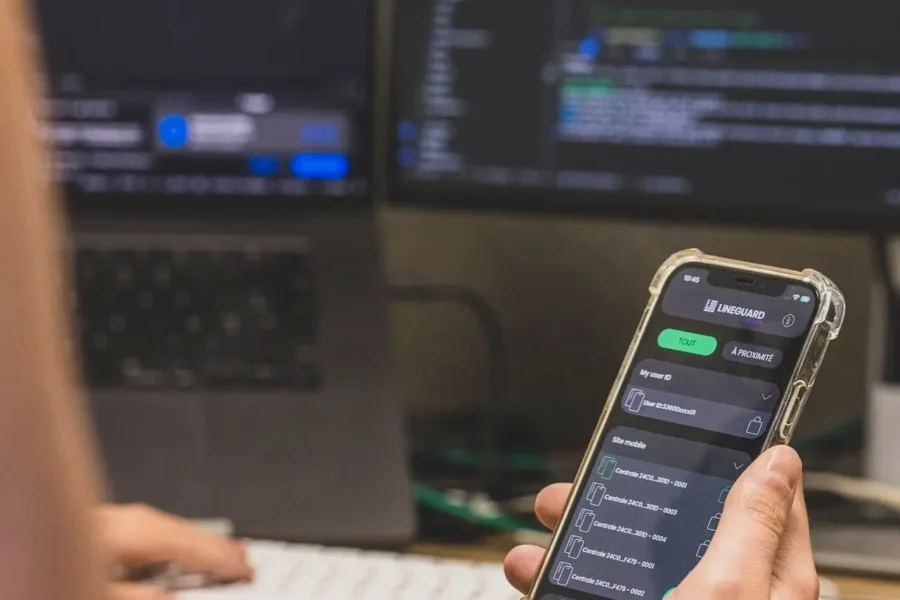
Modern infrastructures increasingly adopt hybrid terminals. By simultaneously supporting 13.56 MHz and 2.4 GHz frequencies, these devices process physical badges and mobile credentials on the same hardware, unifying physical and digital access points.
Protocol compatibility remains equally critical. Native support for industry standards, including Wiegand, OSDPv2, and SSCP, ensures seamless integration with existing central controllers. This flexibility enables gradual system migration, protects legacy hardware investments, and accelerates digital adoption.
A strategic choice for seamless security modernization:
- Zero-downtime migration: uninterrupted operations during reader or technology upgrades.
- Asset longevity: continued utilization of legacy infrastructure.
- Immediate scalability: instant deployment of smartphone-based virtual credentials.
The LiNEGUARD answer: where high reliability meets “Made in France” manufacturing
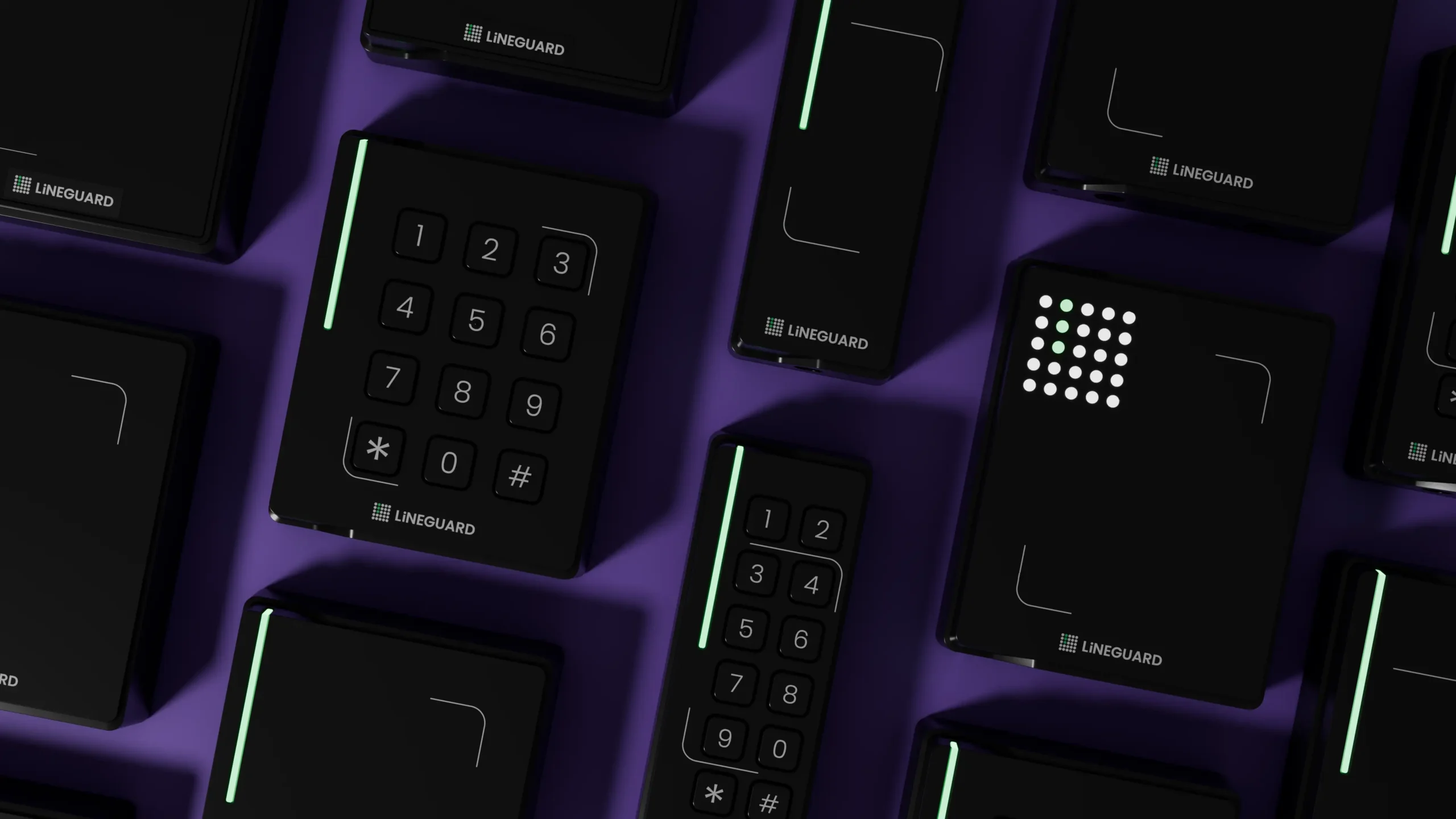
Addressing cloning and vandalism risks, LiNEGUARD redefines access control standards with enterprise hardware and software solutions. LiNEGUARD combines high security, advanced functionality, and 100% French manufacturing as part of an ISO 14001-certified approach, spearheaded by FDI.
Key advantages for your security infrastructure
Investing in a secure, future-proof access solution delivers tangible advantages for security directors and facility managers:
Tailored solutions for every space: LiNEGUARD expert recommandations
Choosing access hardware comes down to striking the right balance between target security, installation costs, and day-to-day operations. Tailored to your technical requirements and budget, LiNEGUARD delivers purpose-built solutions for every entry point:
- Main entrances & Lobbies: Line Ultra Touch | From €510,00
Designed for building exteriors and vestibules, this reader features a customizable display to showcase your logo and welcome visitors. An intuitive touch-chime instantly alerts reception, while a dynamic scramble keypad shuffles digit positions on every attempt to eliminate shoulder surfing.
- Offices & meeting rooms: Matrix Ultra Prox | From €220.00
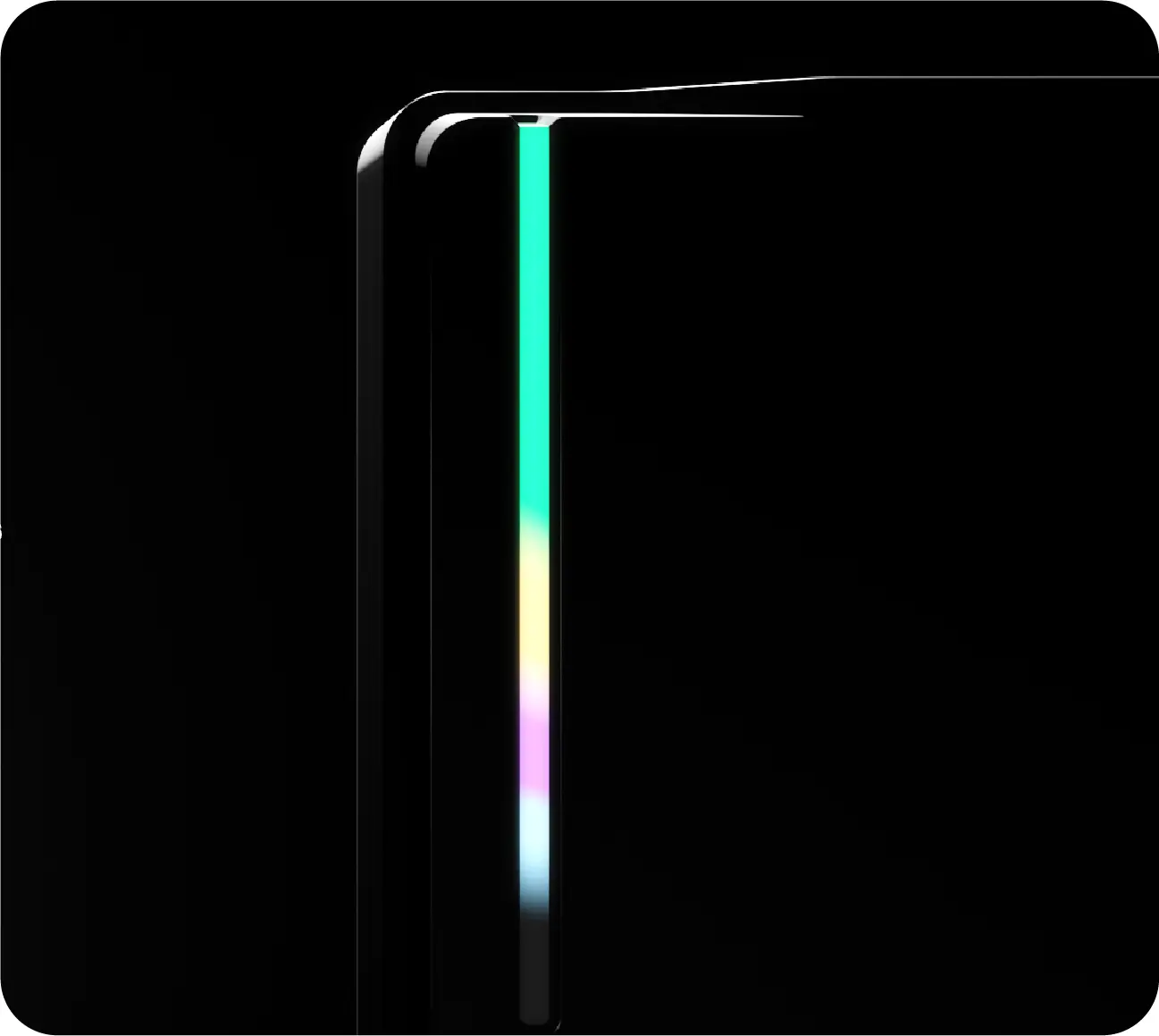
Featuring a narrow mullion footprint, multi-factor authentication (badge + PIN), and a 25-LED status matrix, this unit delivers a discreet yet highly secure hardware barrier for sensitive interior doors.
- Dining areas: Line Ultra Touch | From €510.00
Displays corporate logos, operational hours, and real-time status updates (“Open” / “Closed”) directly on screen, delivering instant visual communication alongside automated scheduled access control.
- Parking Gates & Vehicle Access: Line Ultra Keypad or Line Nano Prox | From €306.00 / €270.00
For high-security zones, the Line Ultra Keypad combines badge reading with confidential PIN entry. Alternatively, the Line Nano Prox enables long-range Bluetooth (BLE) hands-free access, allowing vehicle entry without opening windows.
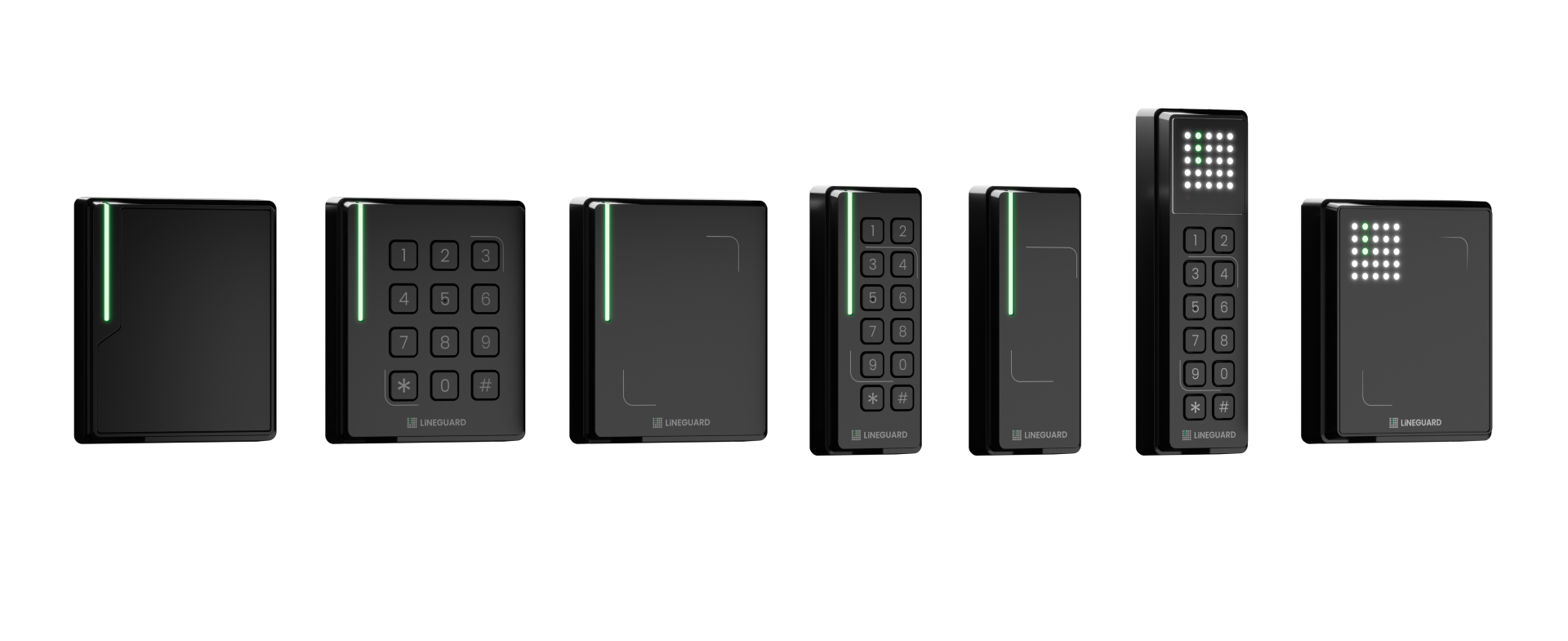
Selecting an enterprise access reader extends far beyond mounting physical hardware: decisions surrounding RFID frequencies, controller architecture, and encryption standards directly govern overall building integrity. Deploying certified, multi-protocol readers tailored to specific operational zones transforms access control into an agile, future-proof security asset.
Frequently asked questions (FAQ)
How can radio frequency hacking be prevented on access readers?
Mitigating RF threats (cloning or remote credential harvesting) requires deploying readers compatible with high-security chips (such as DESFire® EV2/EV3) featuring EAL6+ certified hardware security modules. This ensures cryptographic keys remain fully encrypted inside hardware. Dedicated Electromagnetic Compatibility (EMC) testing guarantees reader immunity against external RF interference in compliance with stringent market standards.
What distinguishes proximity readers from long-range readers?
Proximity readers require credentials to be presented within 10 cm (using 13.56 MHz frequencies), ensuring deliberate user intent and preventing accidental door unlocking. Long-range readers (using 2.4 GHz BLE) detect credentials across several meters, making them ideal for parking gates and vehicular barriers.
Which readers perform best in high-traffic access points?
High-throughput locations (reception turnstiles, main lobbies, gate barriers) benefit most from contactless RFID and mobile credential readers. Capable of processing credentials in under 200 milliseconds, these units maintain rapid flow rates while eliminating mechanical contact wear.
What hardware specs are required for exposed exterior installations?
Exterior readers require IP65 ratings for dust and water protection, alongside IK10 ratings for impact and vandal resistance. Conformal-coated electronic circuit boards further extend hardware lifespans in severe weather environments.
How are LiNEGUARD readers integrated into existing access systems?
LiNEGUARD readers integrate seamlessly via native support for universal protocols including Wiegand, OSDP, and SSCP, ensuring compatibility with third-party central controllers. Support for up to 8 simultaneous credential profiles and broad MIFARE® compatibility enables smooth, staged migrations without system downtime.