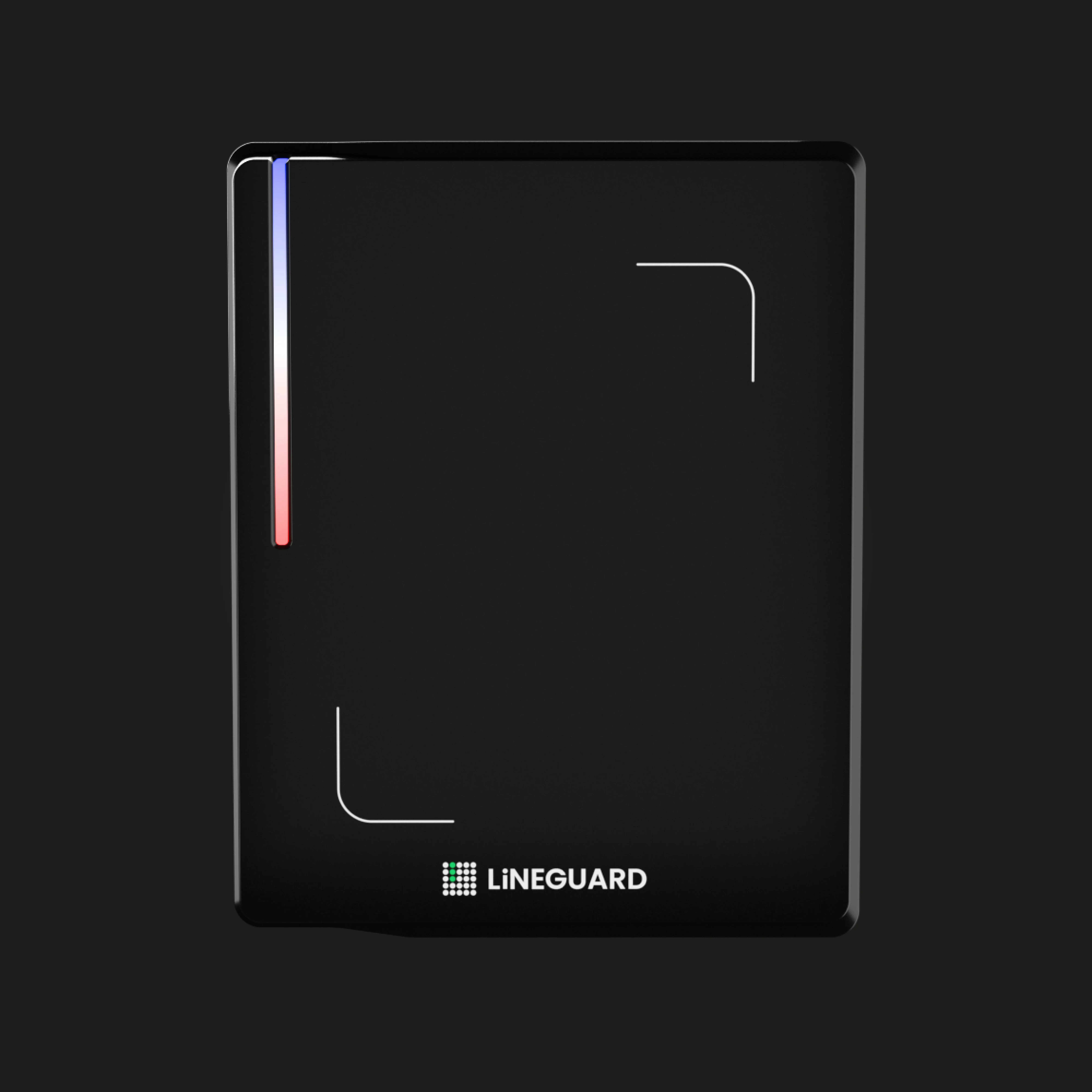
With the launch of the new line of LiNEGUARD access control readers, every decision aligns with a clear vision: reducing the environmental footprint of the products, from the core technology right down to the packaging.
In this approach, packaging is far more than just a container. It serves as a catalyst for environmental commitment, a silent manifesto reflecting a core conviction that innovation is only meaningful when accompanied by real, measurable environmental responsibility.
Purpose-driven design: making less mean more
From the very beginning, the strategy surrounding the packaging was built on a foundational principle: less is more. Limit materials. Eliminate waste. Reduce both visible and invisible environmental impacts.
The goal extends well beyond protecting the reader physically. The objective is to design a more responsible packaging solution that:
- Minimizes resource consumption.
- Lowers the carbon footprint associated with transport.
- Eliminates the use of inks, varnishes, and chemical treatments.
- Simplifies sorting and maximizes recyclability.
- Tangibly embodies the brand’s environmental vision.
The entire process respects both our visual identity or perceived quality.
Balancing environmental demands and technical realities
Several constraints quickly emerged. Traditional corrugated cardboard packaging used more material than necessary, limiting any coherent transition toward greater sustainability. The design choices therefore had to balance:
- A reduced environmental footprint,
- A clear, recognizable brand identity,
- Controlled costs compatible with the business model,
While the easiest route would have been to rely on printing, environmental consistency demanded a different path.
Embossing: where sustainability meets design
This challenge led to the selection of embossing.
An ink-free marking method requiring no additional materials, achieved through simple mechanical pressure.
From an environmental standpoint, the benefits were immediate:
- Zero chemical compounds.
- Total recyclability.
- Minimal environmental impact.
Yet, the technical challenge was substantial: replicating a complex logo on recycled material while maintaining readability and structural integrity.
Selecting a durable, minimalist recycled Ecopack cardboard provided the ideal balance between:
- Sustainability.
- Quality.
- Logistical compatibility.
- Ecological consistency.
This choice was not made for aesthetics; it was driven by environmental purpose.
Transforming constraints into opportunities
Instead of reverting to highly visible but polluting printing methods, the team refined the embossed logo through testing, adjusting, and optimizing.
Concurrently, regulatory labels were redesigned with reduced sizes, optimized materials, and tightly controlled quantities.
Every gram eliminated translates directly to an environmental impact avoided.
Embodying the LiNEGUARD environmental vision
The result is an environmentally conscious packaging solution that aligns perfectly with the brand’s commitments:
- Recycled and recyclable materials,
- Zero ink,
- Embossed branding,
- Only the strictly necessary amount of material used,
- Optimal protection,
- Overall reduction of the carbon footprint,
More than packaging: a tangible vision of sustainability
This project illustrates a core conviction at LiNEGUARD:
every product must be designed through the lens of sustainability, minimalism, and environmental responsibility.
This packaging does not merely house LiNEGUARD readers.
It carries the brand’s vision of a future where technology, innovation, and environmental commitment move forward together, efficiently, authentically, and consistently.